
Data Privacy Risk Management
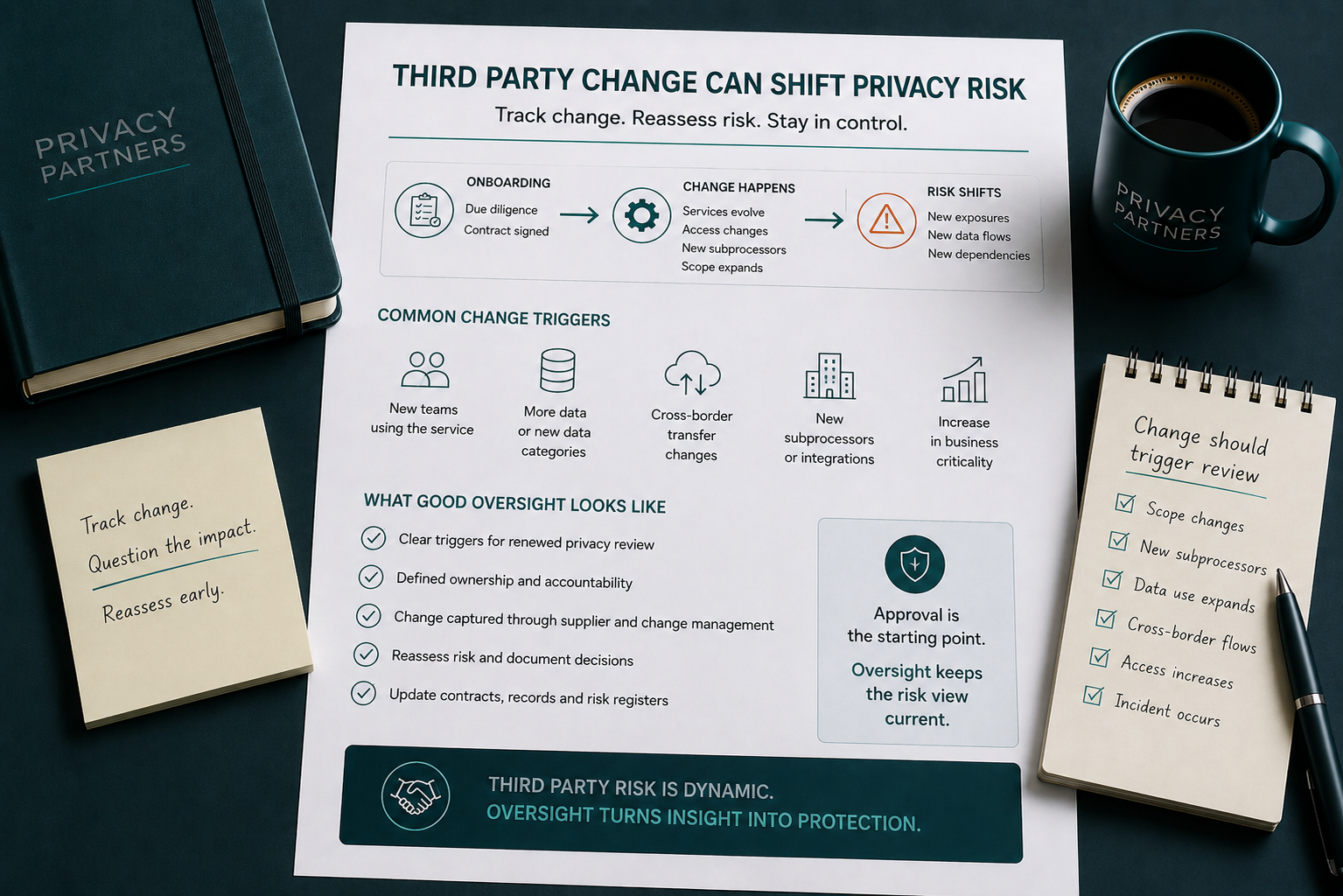
Privacy risk gets missed when third party change is poorly tracked
Initial vendor review is only part of the story. Privacy risk often grows later through service changes, new sub-processors, broader data use, and shifting access models that the organisation does not reassess in time.
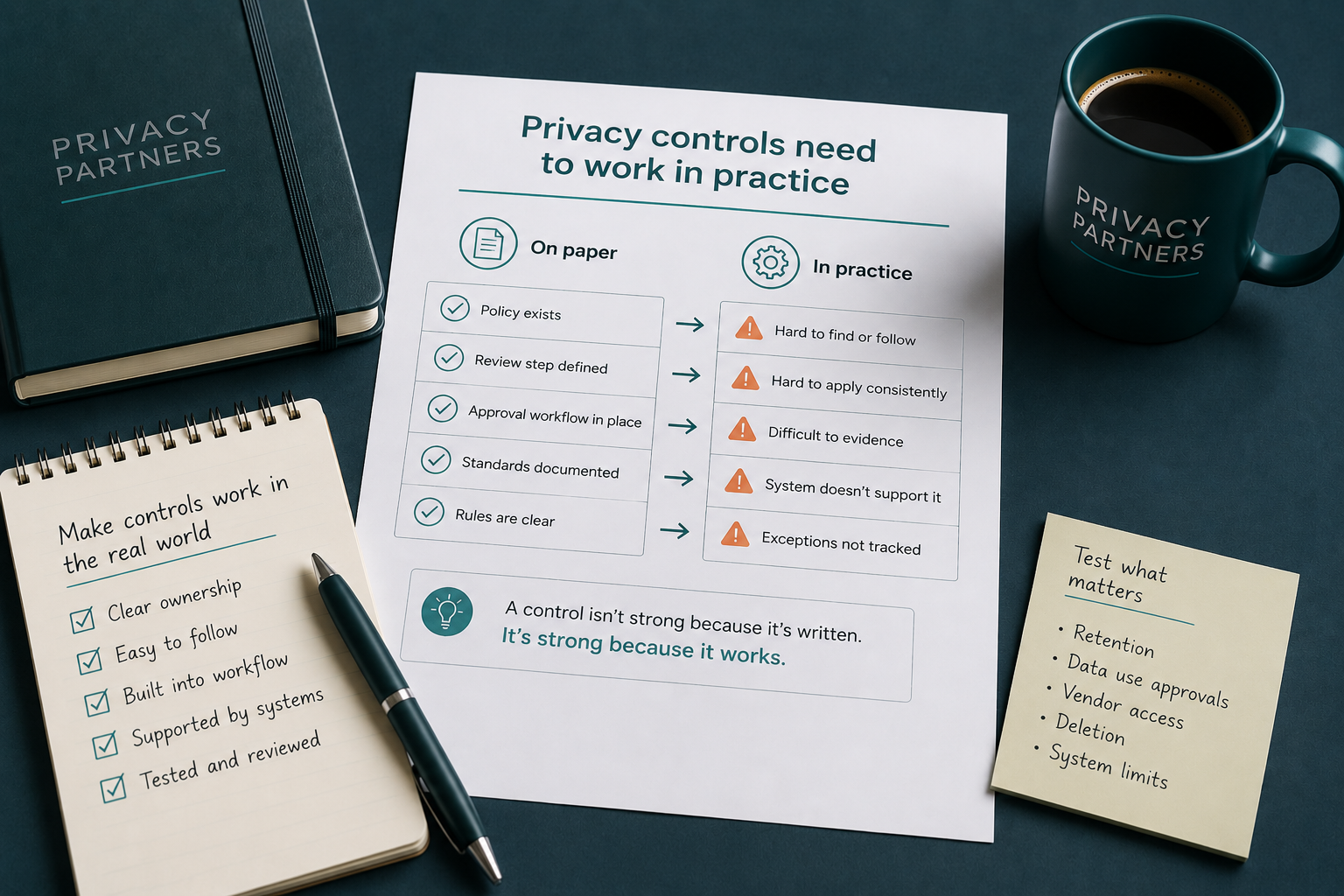
Too many privacy controls look strong on paper and weak in practice
Privacy controls often look mature in policy documents, but break down in day-to-day operations. Strong privacy risk management depends on testing whether controls work in practice, not only whether they exist on paper.
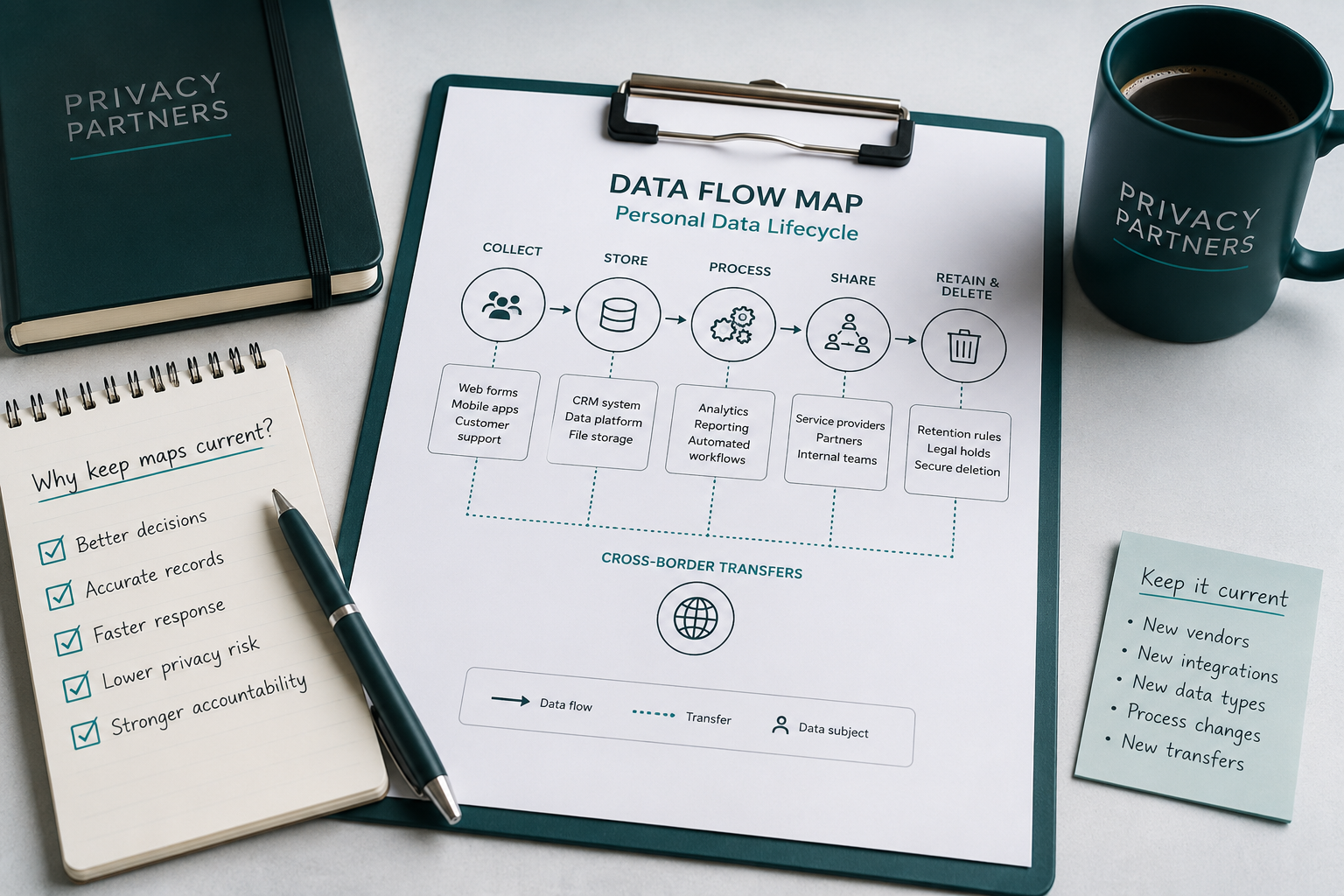
Data flow mapping fails when it becomes a one-off exercise
Many organisations build data flow maps during a project and never revisit them. That creates blind spots over time. A useful map is not just a diagram. It is a working view of how data moves in practice.
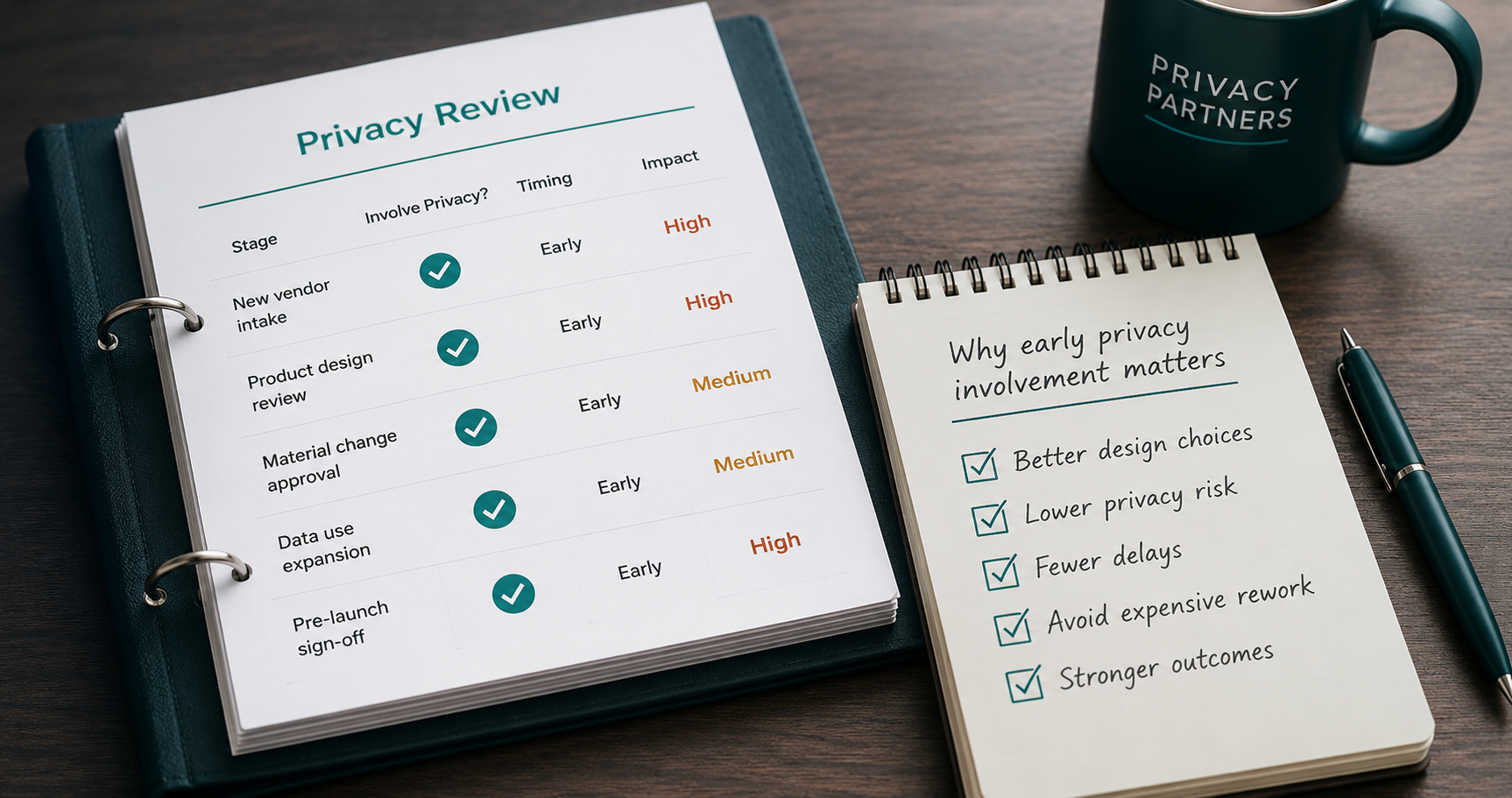
Privacy reviews are often late and that changes the whole conversation
Privacy risk management becomes much harder when review starts after design, procurement, or delivery choices are already fixed. Early involvement is not about slowing work down. It is about avoiding expensive rework.
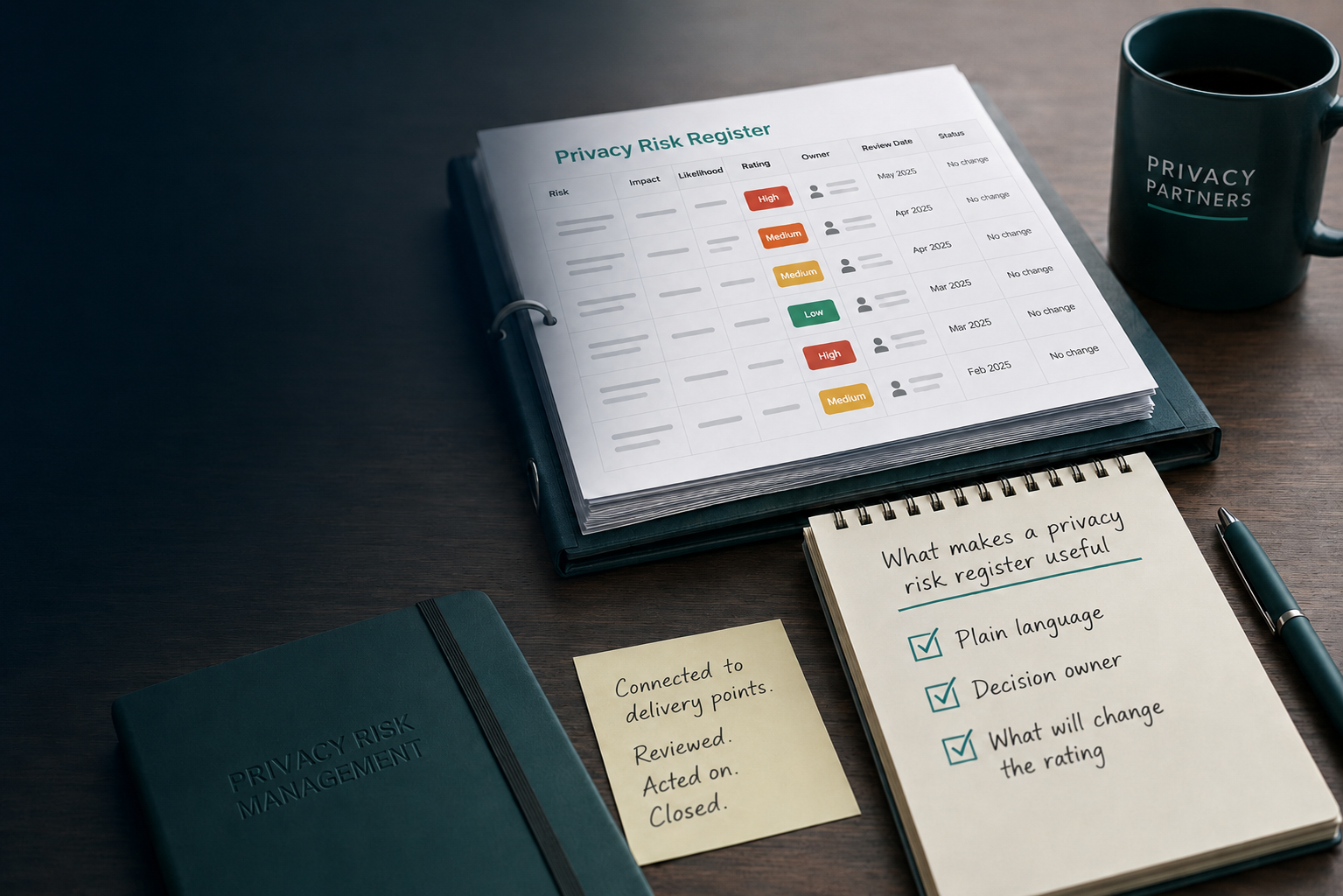
Why privacy risk registers stop being useful
Many organisations have a privacy risk register, but few trust it. The problem is rarely the template. It is usually ownership, review discipline, and weak links to operational decisions.
Exploring this topic for your organisation?
Talk to us about how this area applies to your operating context and priorities.